LS217™ — Lightguide Transmittance Monitoring Device
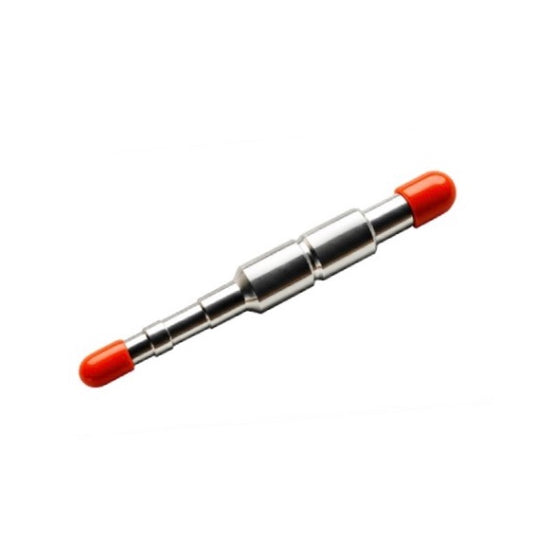
Incure LS217™ occupies a UV spot curing system's lightguide port without delivering UV — it returns a transmittance value instead of a cure. That number, tracked against an established baseline at each maintenance interval, is the only quantified method for scheduling lightguide replacement before degradation causes under-curing or a line stop. Connects via Ø5mm Standard D to any mercury arc, xenon, or halogen UV spot curing system using that port.
Catch Transmittance Drift Before the Line Stops
Without a simulator, the first measurable sign of a degraded lightguide is a failed bond or an under-cured assembly — by definition, after the damage is done. The LS217™ provides a quantified transmittance reading at every maintenance check. Set a replacement threshold at initial process qualification — say, 75% of baseline — and replace on measurement, not on failure.
Qualified UV Dose at Every Maintenance Interval
FDA 21 CFR Part 820, ISO 13485, and aerospace process control requirements call for documented evidence that the UV delivery system is performing within specification at defined intervals. The LS217™ provides a repeatable optical reference measurement — attach, read, log, remove. No part exposure. No cure. Suitable for incoming inspection of new lightguides, scheduled preventive maintenance, and formal process requalification.
Ø5mm Standard D — Fits the Port Already on Your System
The Ø5mm Standard D connection is the universal interface for UV spot curing lightguides in industrial and laboratory systems. The LS217™ slots directly into the same port used by the production lightguide — no adapters, no reconfiguration, no separate test fixture. Compatible with mercury arc, xenon, and tungsten halogen UV spot curing lamp systems.
| Product Specification — LS217™ Lightguide Simulator | |
| Model | LS217™ |
| Function | Lightguide optical transmittance monitoring |
| Diameter | Ø5mm |
| Connection Type | Standard D |
| Compatible UV Source Types | Mercury arc · Xenon · Tungsten halogen |
| Compatible Systems | Standard UV spot curing systems with Ø5mm Standard D lightguide port |
| Use Cases | |
| Incoming Inspection | Establish baseline transmittance value for each lightguide at receipt before entering production inventory |
| Preventive Maintenance | Track transmittance at defined intervals (weekly / monthly) against the baseline; replace at process-qualified threshold |
| Process Qualification | Document UV delivery system performance at process development and at each requalification cycle |
| Regulated Manufacturing | Provides repeatable reference measurement for FDA 21 CFR Part 820, ISO 13485, and aerospace process control documentation |
| Ordering | |
| P/N | LS217 |
The LS217™ is a diagnostic tool — it does not deliver UV light to a bond site and must not be used as a substitute for a production lightguide. A common industry replacement threshold is 70–80% of the original baseline transmittance reading; however, the appropriate threshold is process-specific and should be established and documented during initial process qualification. Actual replacement timing will depend on production intensity, environment, and process criticality.