
UV Optical Adhesives — Optik™
UV-curable adhesives engineered for precision optical assembly — delivering optical clarity, refractive index matching, and low outgassing for lens bonding, prism mounting, camera module active alignment, and fiber optic interconnects. Cure on demand and lock optical components in position instantly, eliminating drift and mechanical mount complexity.
Technical Specifications
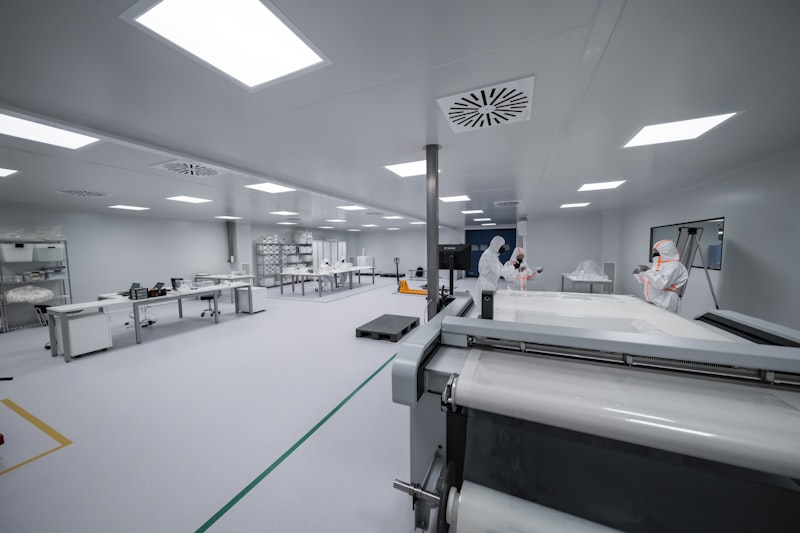
Built for Precision Optical Assembly
Optik™ formulations are specified across photonics, defense, consumer electronics,
and medical imaging wherever optical clarity, dimensional stability, and low outgassing are required.




Frequently Asked Questions
Common questions about Optik™ UV optical adhesives for precision assemblies.
-
Index-matched means the adhesive is formulated so its refractive index closely matches that of the glass or optical substrate it bonds — typically n=1.52–1.56 for crown glass. When the refractive indices are matched, there is no reflective interface at the bond line, which eliminates signal loss, back-reflection, and ghost images in precision optical systems.
-
Yes. Select Optik™ grades meet NASA outgassing requirements (ASTM E595), with total mass loss (TML) below 1.0% and collected volatile condensable material (CVCM) below 0.1%. This qualifies them for space, satellite, and vacuum chamber applications where outgassed volatiles could contaminate optics or sensors.
-
Yes. High-flow Optik™ grades with 450–5,000 cP viscosity and effectively infinite open working time allow assemblers to perform six-axis active alignment of lenses, camera modules, and sensor assemblies before triggering UV cure. This UV-on-demand approach locks the alignment in place without the drift associated with mechanical clamps or slow-curing thermosetting adhesives.
-
Yes. Optik™ dual-cure UV/thermal grades are available for barrel assemblies, camera modules, and housings where some portions of the bond line are in shadow and cannot be directly UV-exposed. UV-irradiated zones cure instantly; shadowed areas cure fully via the thermal secondary mechanism at a modest post-cure temperature, ensuring complete cure across the entire assembly.
-
Birefringence in bonded prisms is caused by residual stress induced by adhesive shrinkage or stiffness mismatch. Optik™ low-shrinkage grades are formulated to minimise volumetric change during cure, dramatically reducing the stress transferred to the optic. For large or thick bonded elements, flexible grades with lower modulus are selected to allow the adhesive to accommodate thermal expansion differentials without loading the glass.
-
Optik™ grades span a refractive index range from approximately n=1.47 to n=1.56, covering the majority of optical glass and plastic substrate types used in precision assembly — including crown glass, borosilicate, fused silica, polycarbonate, and PMMA. Contact our team with your substrate refractive indices and we will recommend the closest matching grade.